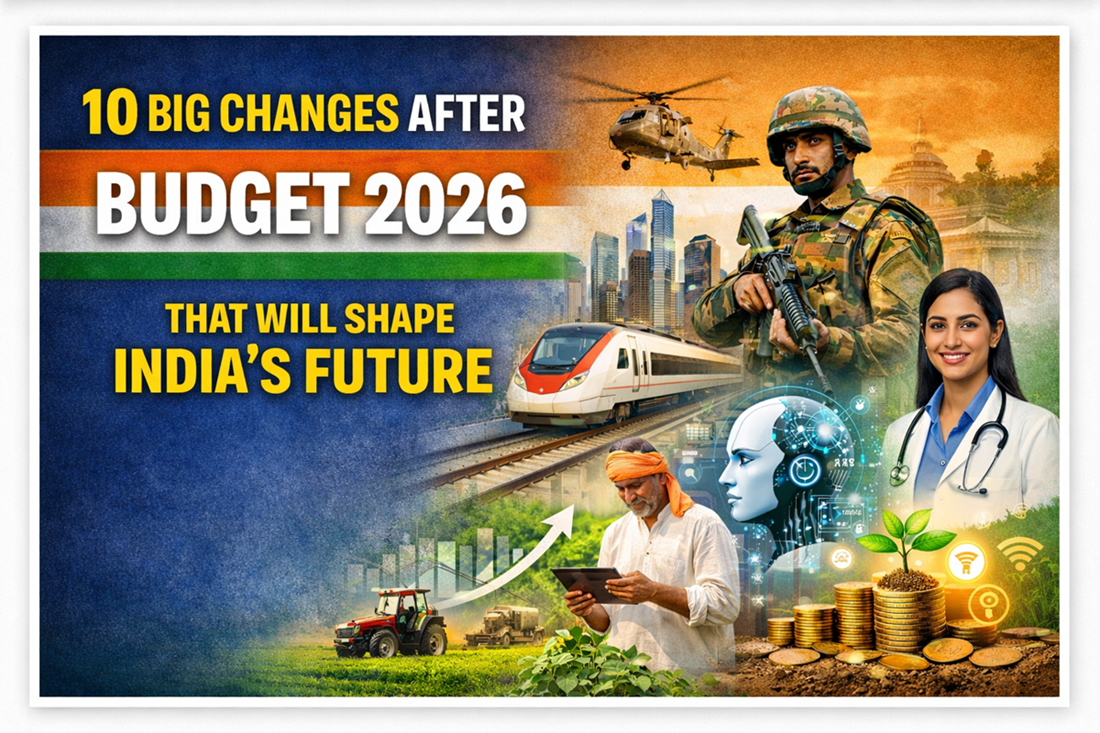
10 Big Changes After Budget 2026 That Will Shape India’s Future
Introduction
The Union Budget 2026 has been one of the most significant budgets in recent years, focusing on economic growth, digital transformation, employment generation, and long-term national development. The government’s vision behind this budget is to strengthen India’s position as a global economic powerhouse while ensuring inclusive growth for all sections of society.
From infrastructure to artificial intelligence, from agriculture to healthcare, Budget 2026 introduced several policy reforms and financial allocations that will impact every Indian either directly or indirectly.
Let’s explore the 10 big changes after Budget 2026 in detail.
1. Record Infrastructure Investment
One of the biggest highlights of Budget 2026 is the massive increase in infrastructure spending. The government allocated a record capital expenditure to improve:
-
National highways and expressways
-
Railway modernization
-
Smart cities development
-
Logistics parks and freight corridors
This move is expected to boost job creation, reduce transportation costs, and improve overall economic productivity.
2. Strong Push for Digital Economy
The government has further strengthened the digital ecosystem by supporting:
-
UPI and digital payment systems
-
Data centers and cloud infrastructure
-
Digital identity and e-governance platforms
This initiative aims to reduce dependency on cash and promote transparent financial transactions across urban and rural India.
3. Artificial Intelligence and Emerging Technologies
Budget 2026 placed major emphasis on emerging technologies like:
-
Artificial Intelligence (AI)
-
Machine Learning
-
Blockchain
-
Cybersecurity
Special funds and research programs have been announced to integrate these technologies into sectors like banking, education, agriculture, and healthcare.
4. MSME and Startup Growth Reforms
Small businesses and startups received major support through:
-
Easier access to institutional credit
-
Faster loan approvals
-
Simplified compliance procedures
-
Digital onboarding systems
These changes aim to make India a more business-friendly economy and encourage entrepreneurship.
5. Education and Skill Development
The government announced multiple reforms in the education sector, including:
-
New universities and technical institutions
-
Digital classrooms and online learning platforms
-
National skill development programs
-
Industry-focused vocational training
The goal is to prepare India’s youth for future job markets driven by technology.
6. Agriculture and Rural Innovation
To improve farmers’ income and productivity, Budget 2026 introduced:
-
AI-based advisory tools
-
Smart irrigation systems
-
Digital crop monitoring
-
Agri-tech startup funding
These steps will modernize Indian agriculture and reduce dependency on traditional farming methods.
7. Healthcare and Pharmaceutical Expansion
Healthcare received a major boost with increased funding for:
-
New hospitals and medical colleges
-
Cancer and mental health programs
-
Affordable healthcare services
-
Domestic pharmaceutical manufacturing
The government aims to make India a global healthcare hub.
8. Defence and Manufacturing Strength
The defence sector saw a significant increase in budget allocation, focusing on:
-
Indigenous defence manufacturing
-
Research and development
-
Export of defence equipment
This supports the Make in India initiative and strengthens national security.
9. Tourism and Cultural Development
Tourism has been identified as a key growth driver. Announcements include:
-
Development of heritage tourism circuits
-
Hospitality skill training programs
-
Eco-tourism and rural tourism projects
This will create large-scale employment opportunities in service sectors.
10. Financial Inclusion and Banking Access
The government emphasized expanding banking services to remote areas through:
-
Digital banking infrastructure
-
Micro-finance and fintech platforms
-
Easy account opening systems
-
Financial literacy programs
This ensures every citizen can participate in the formal economy.
Overall Impact of Budget 2026
Budget 2026 reflects a clear shift toward:
-
Technology-driven governance
-
Inclusive economic growth
-
Employment generation
-
Sustainable development
It is designed not only for short-term economic recovery but for building a strong foundation for India’s long-term future.
Conclusion
The 10 big changes after Budget 2026 show that India is moving towards a more digital, innovative, and globally competitive economy. These reforms will shape the way businesses operate, how citizens access services, and how the nation grows over the next decade.
Budget 2026 is not just a financial document — it is a roadmap for India’s future.