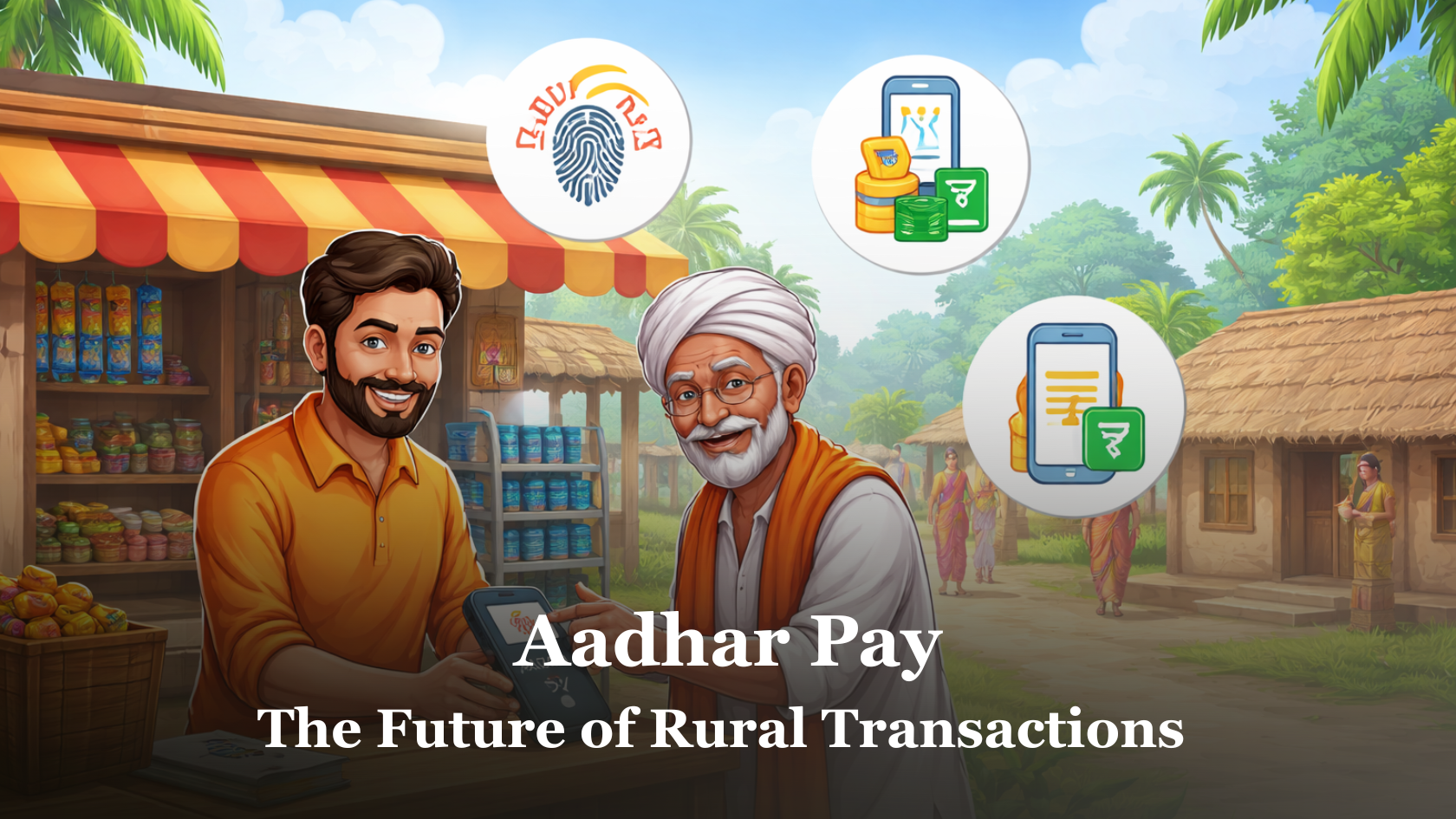
Aadhar Pay: The Future of Rural Transactions
Aadhaar Pay is specially designed to make banking services accessible to those who do not have smartphones or debit cards. It is part of AEPS. Along with biometric authentication, Aadhar Pay has become a powerful tool for achieving the goal of a cashless economy in rural India.
What is Aadhaar Pay and How Does It Function?
Aadhar Pay helps in instant account-to-account payments by just using the customer’s Aadhaar Number and Biometric authentication. Aadhar Pay helps you to avail the following benefits :
- Make Payments
- Check Balances
- Cash Withdrawal
You can get all these services without the need for any cards, PINs or smartphones. The merchants carrying out this process only need a simple Android device or a biometric and Face scanner. This makes the system accessible to all and has a low cost.
AEPS itself is a service that enables its users to access their bank accounts via Aadhar-linked authentication. In the rural and semi-urban areas where traditional banking is limited, these digital banking services are highly useful.
Benefits of Aadhaar Pay for Merchants and Customers
Aadhar Pay is equally beneficial for both customers and merchants.
-
- Aadhar Pay is easy to use – You do not need any cards, cash, PINs, or a smartphone. Only required is an Aadhar number and a servicer provider for this service just like Ezeepay . Starting with Ezeepay requires minimal investment, making it accessible with potential for high returns.
- Instant Settlement – Payments are transferred into the merchant’s bank account very quickly. This will ensure smooth cash flow and has made the merchants’ work easier and smoother.
- Low Cost of Infrastructure – Merchants only need a basic mobile device and a biometric scanner to provide the banking services via Aadhar Pay. This is very suitable for small or rural businesses.
- Financial Inclusion – Aadhar Pay fills the gap, making it easy and simple to avail banking services for everyone. You do not need your own smartphones or payment cards to make digital payments. An Aadhar card is sufficient for making a payment.
- Safety and Convenience – Customers do not need to carry cash or cards, which reduces the fear of theft or other mis happenings. Biometric or face authentication also reduces the risk of fraud and financial loss.
Aadhaar Pay vs UPI: What’s the Difference?
Both the payment methods, i.e Aadhaar Pay and UPI ( Unified Payment Interface), enable safe and secure cashless transactions. However, to know the difference between the two follow the table .
| Aspects | Aadhar Pay (AEPS) | UPI |
| Authentication | Aadhar number and biometric (fingerprint/iris/Face) | Virtual Payment Address (VPA) and UPI PIN required |
| Device required | Biometric Scanner/ Mobile phone | A smartphone with the UPI app installed in it. |
| Target Users | Rural area people or those without a bank account or those who lack tech knowledge | Urban area people, smartphone users and those having the knowledge about using the application. |
| Type of Transactions | Account debit/credit, balance enquiry | P2P, P2M, bill payments, funds transfer |
| Internet Requirement | Limited/ Optional | Mandatory |
| Accessibility | High in rural areas, small shops | Urban and semi-urban areas |
Aadhar Pay helps in empowering people who lack the knowledge of using smartphones, whereas UPI is suitable for people who are comfortable using digital apps.
Security Features in Aadhaar-Based Payments
Aadhar Pay uses highly secure biometric authentication.
- The transactions made using this method require cross-verification with the Aadhar database.
- This helps in reducing fraud. With no requirement to share card details, PINs or passwords, the risk for data theft is less.
- The Aadhar Pay part of AEPS is constantly monitored by the National Payments Corporation of India (NPCI), ensuring robust compliance and security standards.
How Businesses Can Integrate Aadhaar Pay?
Businesses aiming to implement Aadhaar Pay can follow the instructions mentioned below:
- Get ID from Service provider- You can integrate Aadhar Pay through a banking partner enabled for AEPS. This will ensure compatibility with the payment infrastructure and merchant app.
- Register the merchant details- Make a merchant profile with the Aadhar linked bank account. This will ensure seamless payment and settlement.
- Train your staff properly – You need to provide your staff with basic training on usage, troubleshooting and security protocols. It is required for the smooth handling of Aadhaar Pay transactions.
- Promotes Cashless Payments- You need to make your customers understand the benefits of using Aadhar Pay. Try explaining the convenience and safety features provided by the AEPS system.
Ezeepay’s AEPS (Aadhaar Enabled Payment System) facility enables anyone to conduct banking transactions cash withdrawal, balance check, and mini statement with Aadhaar number and fingerprint or face verification. No bank card required only Aadhaar details and biometric verification.
For small businesses, rural enterprises, and financial inclusion initiatives, Aadhaar Pay can unlock new market opportunities. AEPS has made digital transactions easy and simple.