RBI’s 1 Hour Delay on UPI Payments: What It Means for Users, Retailers, and the Future of Digital Banking
Introduction
India’s digital payment ecosystem has grown rapidly, with UPI (Unified Payments Interface) becoming the backbone of real-time transactions. However, with this rapid adoption, cases of fraud and unauthorized transfers have also increased.
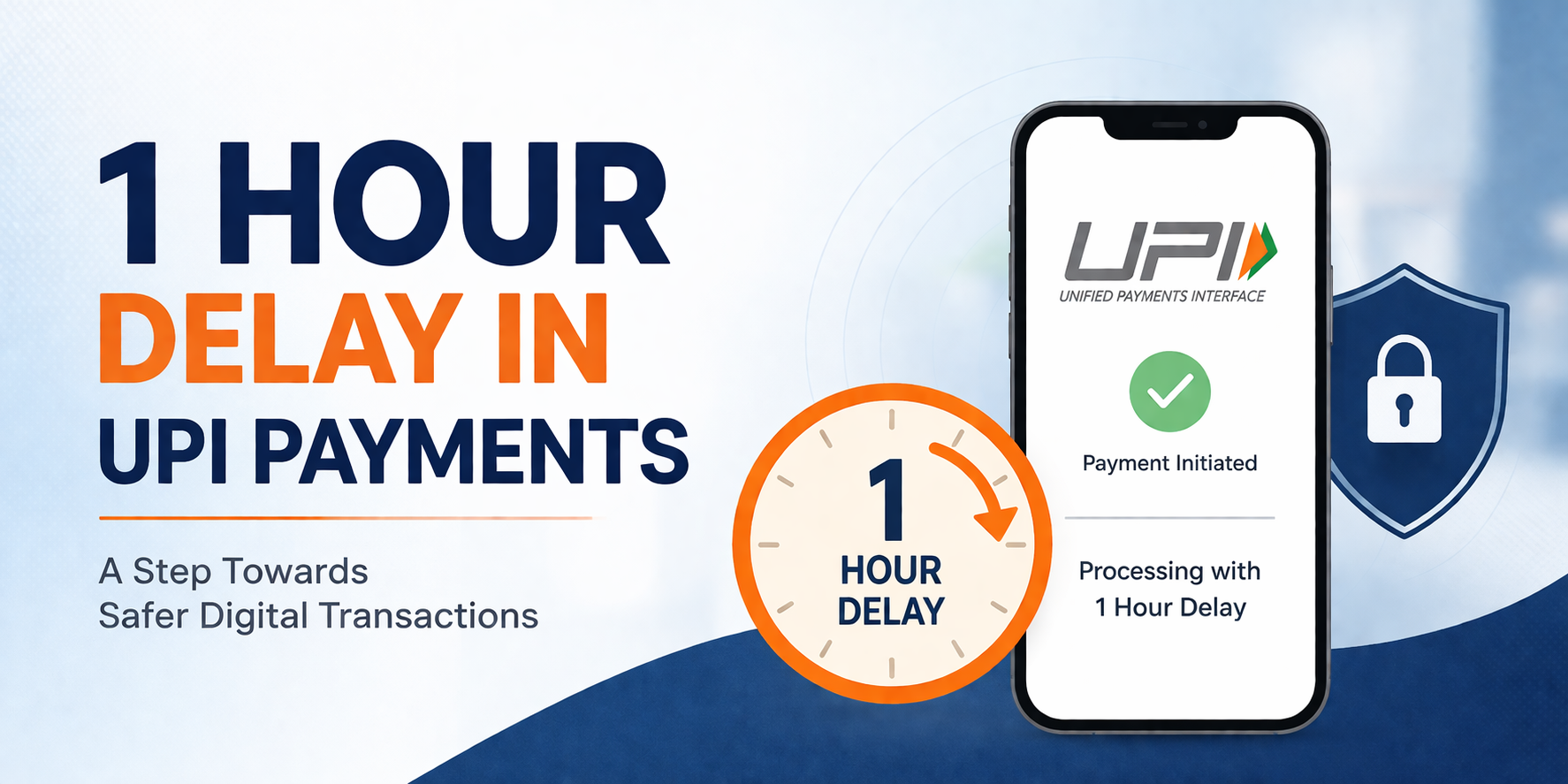
To address this issue, the Reserve Bank of India (RBI) has proposed a 1 hour delay on certain high-value UPI transactions. This move is aimed at improving security and giving users a window to review or cancel suspicious payments.
While this change directly impacts UPI payments, it also opens new opportunities for alternative financial services such as money transfer and upcoming UPI cash withdrawal solutions, especially for platforms like Ezeepay.
What is the RBI’s 1 Hour UPI Payment Delay Proposal?
The RBI has suggested introducing a cooling period of up to one hour for specific types of UPI transactions.
Key Highlights:
- Delay of up to 1 hour for high-value transactions
- Applicable to first-time beneficiaries
- Focus on person-to-person transfers
- Designed to reduce fraud and errors
This means certain transactions will not be processed instantly, allowing users time to verify details before completion.
Why is RBI Introducing This Rule?
The main objective behind this proposal is to reduce digital payment fraud.
Key Issues:
- Instant transactions are difficult to reverse
- Users often fall victim to scams
- Mistaken transfers to wrong accounts
The 1 hour delay provides a safety window where users can:
- Cancel incorrect transactions
- Verify recipient details
- Avoid financial loss
Which Transactions Will Be Affected?
The delay will apply only to high-risk scenarios.
Likely Affected:
- Transactions above ₹10,000
- First-time beneficiary transfers
- Person-to-person payments
Not Affected:
- Merchant QR payments
- Small transactions
- Trusted or whitelisted beneficiaries
This ensures that daily transactions remain fast and convenient.
What is the Whitelist Feature?
The whitelist feature allows users to mark trusted beneficiaries.
Benefits:
- No delay for trusted contacts
- Faster repeat transactions
- Better user experience
This is especially useful for regular payments and business transactions.
Impact on Digital Payment Users
Positive Impact:
- Increased transaction security
- Reduced fraud risk
- Better control over payments
Challenges:
- Delay in urgent transfers
- Adjustment to new system
Overall, the focus is on making digital payments safer.
Impact on Retailers and Ezeepay Partners
For retailers, especially those working with Ezeepay, this change brings both awareness and opportunity.
Key Impacts:
1. Increased Need for Assisted Services
As users become cautious with direct UPI payments, they may prefer assisted transactions through retailers.
2. Growth in Money Transfer Services
Ezeepay retailers can promote money transfer services as a secure alternative for sending funds, especially for high-value transactions.
3. Customer Education Opportunity
Retailers can guide customers about:
- Safe transaction practices
- Understanding delays
- Choosing the right service
4. Higher Footfall and Engagement
Customers looking for safer transaction options may visit nearby retailers more frequently.
Ezeepay’s Opportunity in the Changing Landscape
Ezeepay does not rely on direct UPI payment services, which positions it strongly in this evolving ecosystem.
How Ezeepay Benefits:
1. Demand of Money Transfer Services
With delays in high-risk UPI payments, users may shift towards reliable money transfer services, where Ezeepay already has a strong presence.
2. Upcoming UPI Cash Withdrawal Service
Ezeepay can leverage the upcoming UPI cash withdrawal system, allowing users to access cash securely using digital authentication.
3. Retailer-Centric Model Advantage
Ezeepay’s network of retailers provides:
- Assisted transactions
- Better trust
- Local support
4. Focus on Security and Trust
As security becomes a priority, Ezeepay can position itself as a safe and reliable financial service provider.
Impact on the Fintech Industry
The RBI’s proposal reflects a broader shift in digital banking.
Key Trends:
- Security over speed
- Increased fraud prevention measures
- Growth of assisted financial services
- Stronger compliance requirements
Fintech companies will need to innovate while ensuring user safety.
Will This Slow Down UPI Growth?
Not significantly.
Reasons:
- Most transactions are low-value
- Merchant payments remain instant
- Only high-risk transactions are affected
This ensures continued growth while improving security.
Future of Digital Banking in India
The future lies in balancing speed and security.
Emerging Trends:
- Secure transaction systems
- Assisted digital services
- Expansion of cash withdrawal solutions
- Integration of fintech with ground-level retailers
Conclusion
The RBI’s proposal to introduce a 1 hour delay on UPI payments is a major step towards enhancing digital payment security in India.
While it may slightly impact transaction speed in specific cases, it significantly reduces fraud risk and builds user trust.
For Ezeepay, this is a strong opportunity to:
- Expand money transfer services
- Introduce UPI cash withdrawal solutions
- Strengthen retailer engagement
This change is not a limitation but a transformation towards a more secure and reliable digital banking ecosystem.