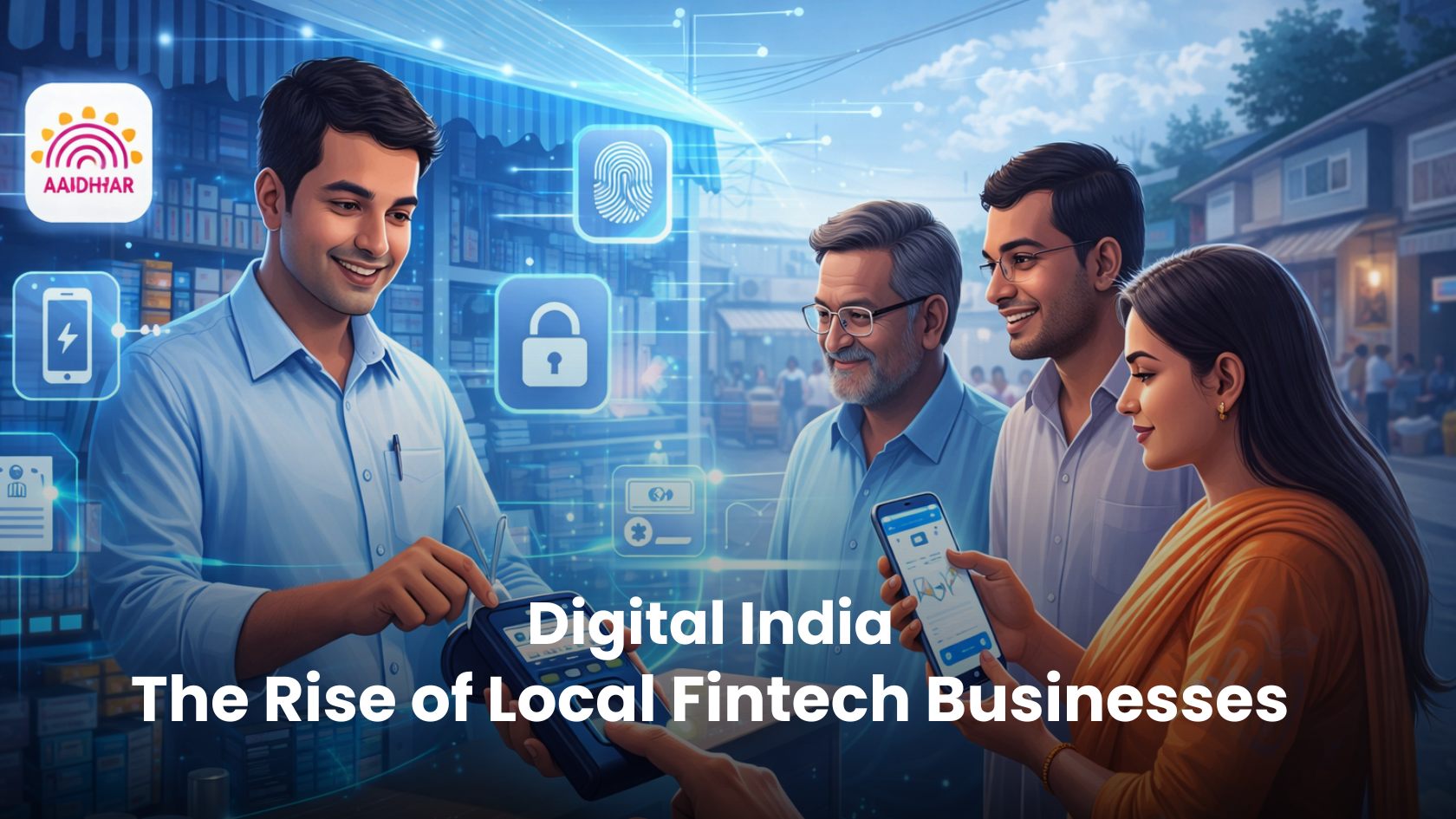
Digital India and the Rise of Local Fintech Businesses
Indians accessing banking services like making payments, recharging, or insurance payments have been transformed under the Digital India initiative. Other than large banks and payment giants it has created a great opportunity for local entrepreneurs to expand financial technologies. Tools like AEPS (Aadhaar Enabled Payment System) company, recharge company and digital wallet facilities are turning small retailers into mini banks in the localities.
The impact of Digital India on local entrepreneurs
Digital India has connected the entire nation, including rural and semi-urban areas, using many digital platforms. Which initiative has increased internet flow and mobile usage in remote areas? This transformation has led to increased income facilities for shop owners and small-scale providers.
Previously, local kirana and mobile stores could only provide recharge vouchers or groceries. But today they can provide customer banking service, money transfer, cash withdrawal, bill payments and many more.
This wide expansion of various banking services is done with an AEPS company or a recharge company that supplies the technology backbone. The facilities strengthen the daily income of small business owners and also build customer trust in them.
Role of AEPS, Aadhaar Pay, and digital wallets
AEPS can be a major game-changer among Fintech tools. Customers can withdraw cash, deposit money, deposit money and check balance using the Aadhar authentication and fingerprint scanning provided by AEPS company. You do not need a traditional debit card or a bank branch visit to avail these banking services. The rural population who are not comfortable with smartphone apps can use the AEPS services with ease.
Merchants can use Aadhar Pay to directly accept payments from a customer’s Aadhar-linked bank account. No more dependency on machines and cards, profits for both retailers and customers. For them, digital wallets like various UPI apps have also increased cashless transactions. These are safe and allow the customer to get various banking services easily accessible.
All these services together make the small retail shop act like a financial service hub.
Why are small retail businesses becoming financial hubs?
Nowadays small retail businesses are increasing in remote areas because of necessity as well as opportunity. On the one hand, bags are still limited in numbers in remote areas. They lack infrastructure and certain facilities. On the other hand, the retailers have already established trust and daily interaction with these communities. So people have started building trust to use various banking services with retailers.
A shopkeeper who has an AEPS company partnership can provide biometric cash withdrawal, which reduces your dependency on ATMs. The same shopkeeper can add mobile recharge service, pay utility bills, DTH subscription service and many more. This helps the customer to get several financial services at a single spot. Due to this wide range of banking services available at local retail shops, it has turned into a form of financial inclusion.
Opportunities with fintech platforms like Ezeepay
Fintech platforms like Ezeepay are playing a major role in expanding the digital network. They provide user-friendly software, multi-service dashboards, and 24/7 support. These platforms are helping local entrepreneurs manage their financial services efficiently.
By using our single platform a shopkeeper can:
- Make AEPS transactions like (withdrawal, deposit, balance inquiry).
- You can provide domestic money transfers to your customers.
- Offer prepaid and postpaid mobile recharge services
- Make utility bill payments for electricity, water and gas.
- Pay insurance premiums and loan repayment.
This wide range of services can then benefit retailers and attract many customers who prefer a one-stop point for all financial needs.
Platforms like Ezeepay can help you start a small-scale business without much risk or heavy investment.
Challenges and how to overcome them
Despite many opportunities and facilities available, local fintech growth is not very smooth. There are many challenges which you might face if planning to start these businesses.
- Digital literacy gaps – mini customers like the knowledge about biometric transactions or wallet apps. As entrepreneurs, you need to invest time to make the customers know about the services and build confidence.
- Trust and security concern– you need to build partnerships with certified AEPS companies and reliable fintech platforms. This reduces the chance of fraudulent transactions and increases the trust of the customer.
- Infrastructure issues– Low internet, offline transaction failures, and backup connectivity can be certain issues in these setups.
- Regulatory Compliance – Stay updated per the RBI guidelines and follow them strictly.